
Quality Assurance
Engineered to Endure: Built-Last Solar Lighting
Comprehensive Quality Control
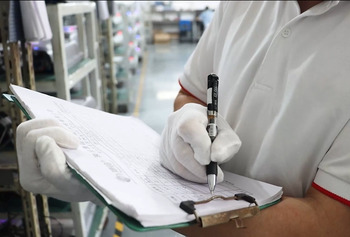
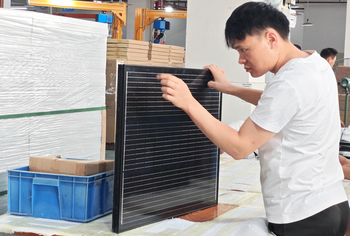
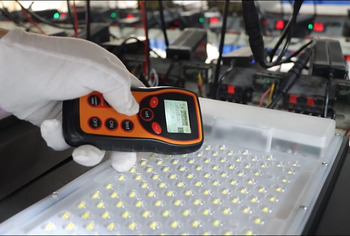
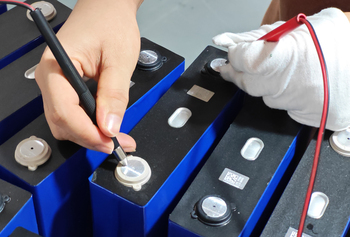
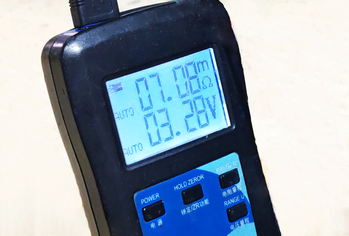
Our comprehensive quality program begins with systematic battery validation, where every battery undergoes charge/discharge capacity verification and stability testing before integration. Solar panels receive thorough visual and electrical performance inspections to ensure optimal energy harvesting capability.
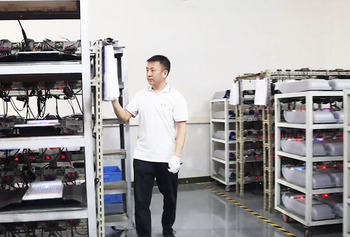
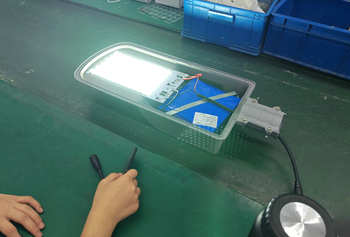
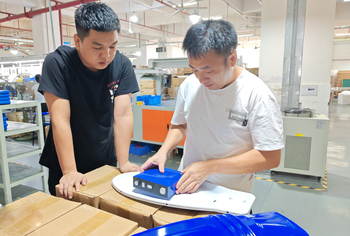
During assembly, all units complete mandatory operational validation – each fixture undergoes a minimum 24-hour aging test to verify proper system functionality under realistic conditions. Critical performance parameters including charging behavior, illumination output, and dusk-to-dawn operation are monitored throughout this burn-in period.
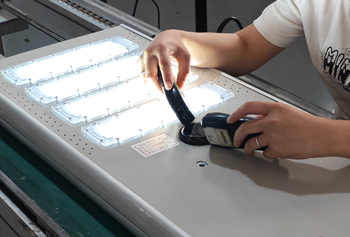
Statistical sampling methods are applied for additional environmental testing (temperature extremes and waterproof validation), while production staff conducts in-process visual inspections at key assembly stages. Quality records are maintained throughout fabrication to enable traceability and continuous improvement initiatives.
Certifications & Compliance
Third-Party Verified Quality Standards
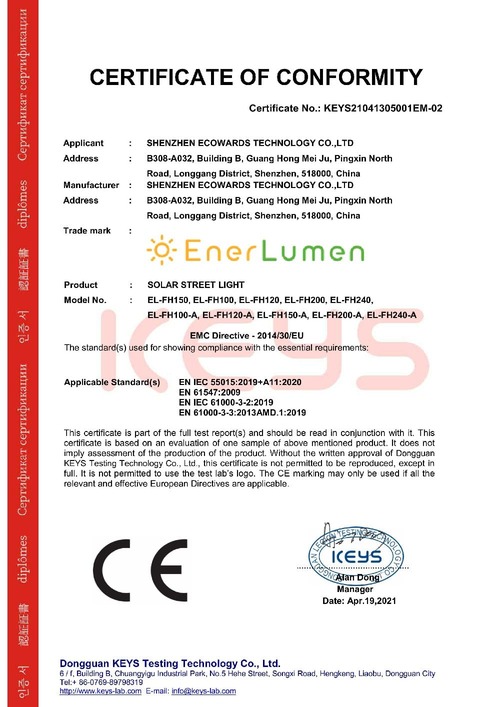
CE-EMC
Ensures electromagnetic compatibility, minimizing interference with other devices for reliable solar light operation.
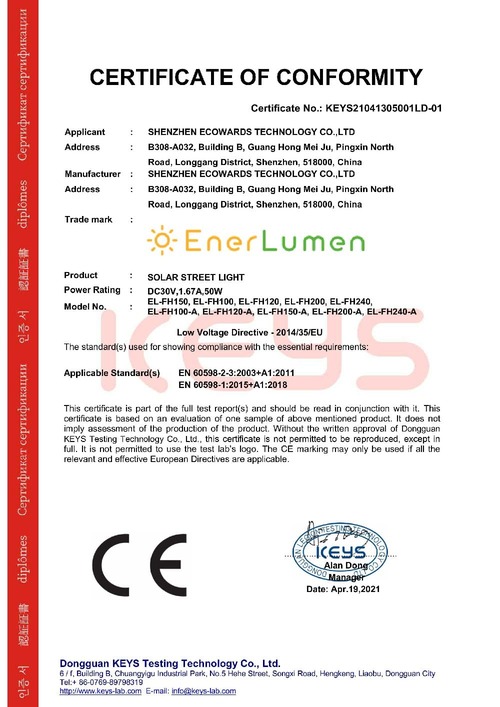
CE-LVD
Guarantees low-voltage safety compliance, protecting users from electrical hazards in all lighting conditions.
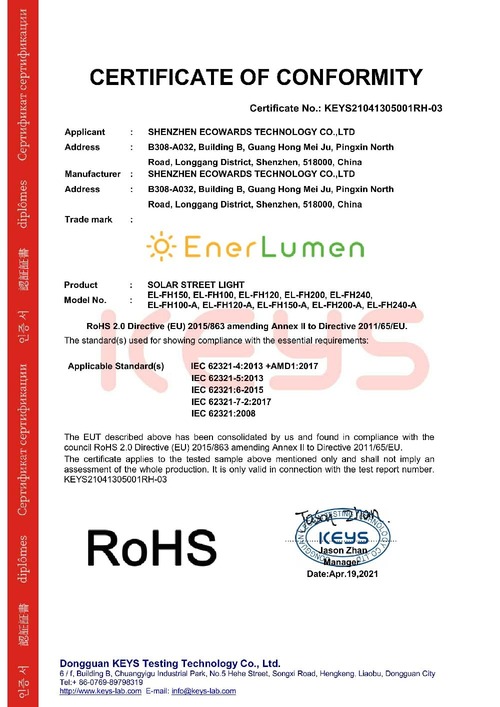
RoHS
Confirms lead-free and eco-friendly materials, ensuring safe and sustainable lighting solutions for global markets.
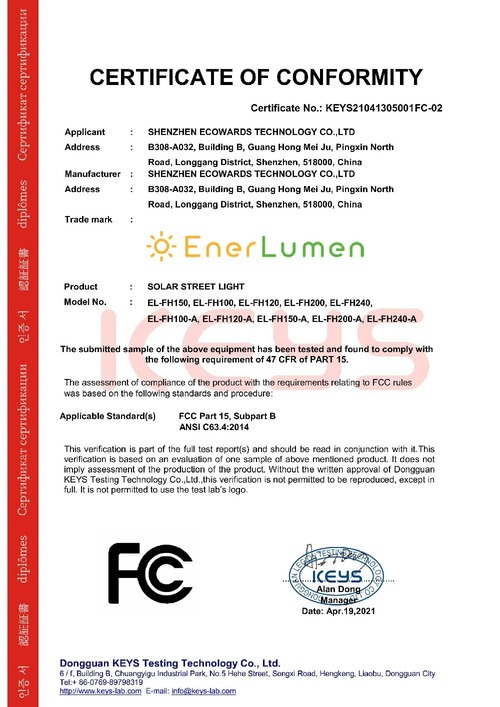
FCC
Validates radio frequency safety, preventing signal disruption in wireless-controlled solar lighting systems.
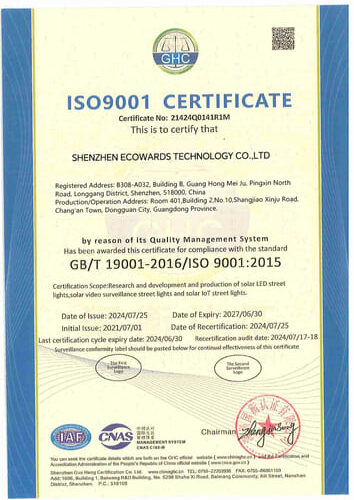
ISO9001
Demonstrates rigorous quality management, ensuring consistent performance and durability across all LED solar lights.
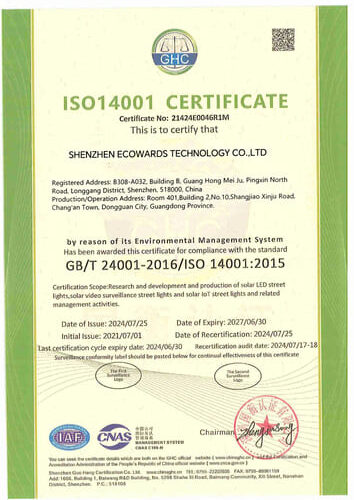
ISO14001
Reflects environmental responsibility in manufacturing, reducing waste and energy consumption sustainably.
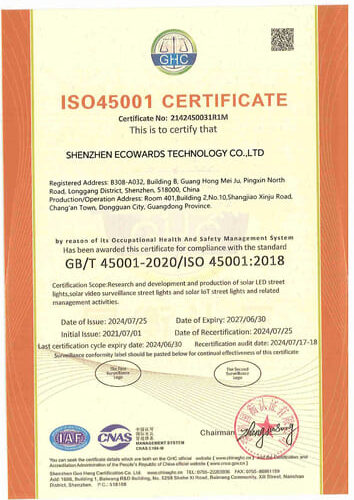
ISO45001
Certifies workplace safety standards, ensuring ethical production practices for high-quality solar lighting.
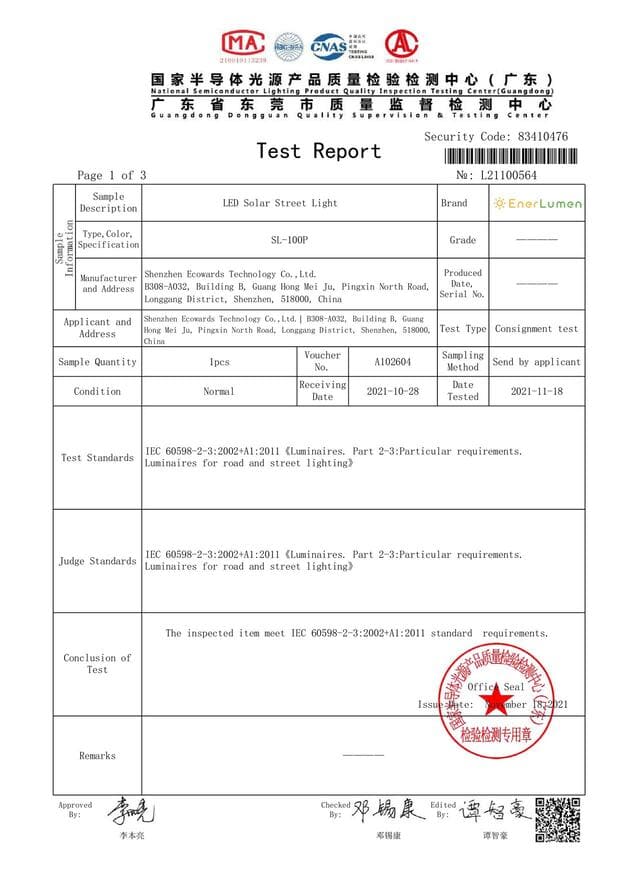
wind-test
Proves wind resistance up to 52 m/s, ensuring stability in harsh weather conditions for outdoor lighting.
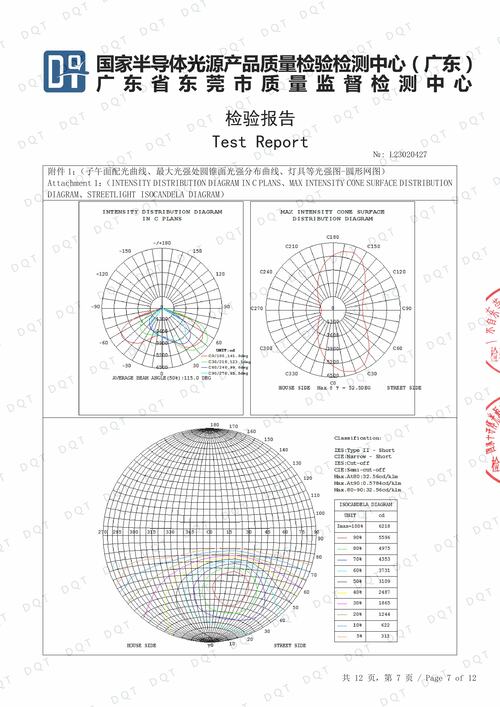
photometric test
Validates light distribution & luminance efficiency, optimizing visibility and energy-saving performance.
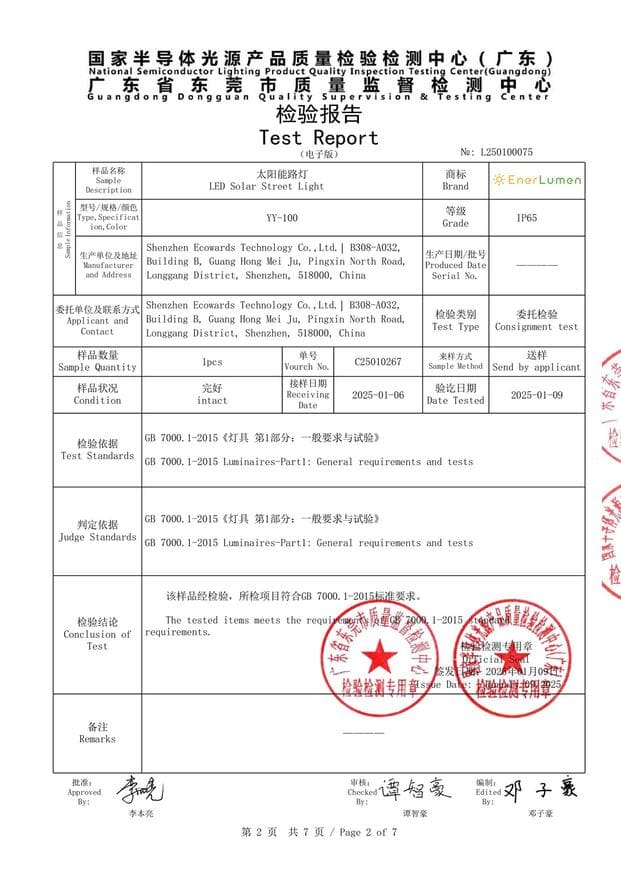
IP65 Test
Protects against dust and low-pressure water jets, ideal for garden and pathway solar lighting durability.
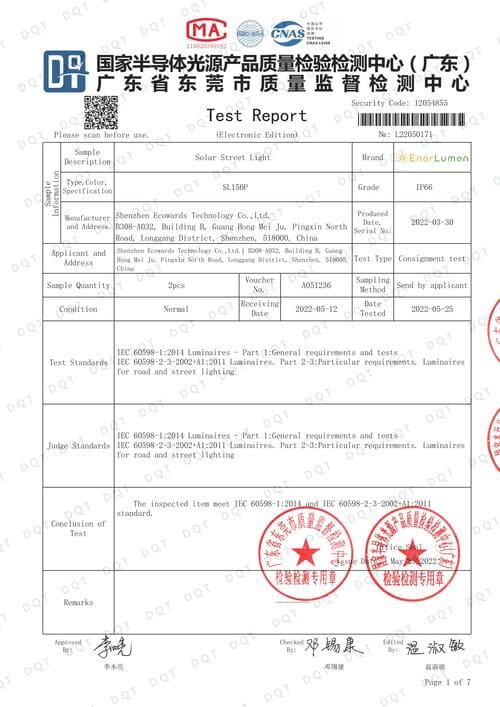
IP66 Test
Resists heavy rain and powerful water jets, perfect for all-weather outdoor solar security lights.
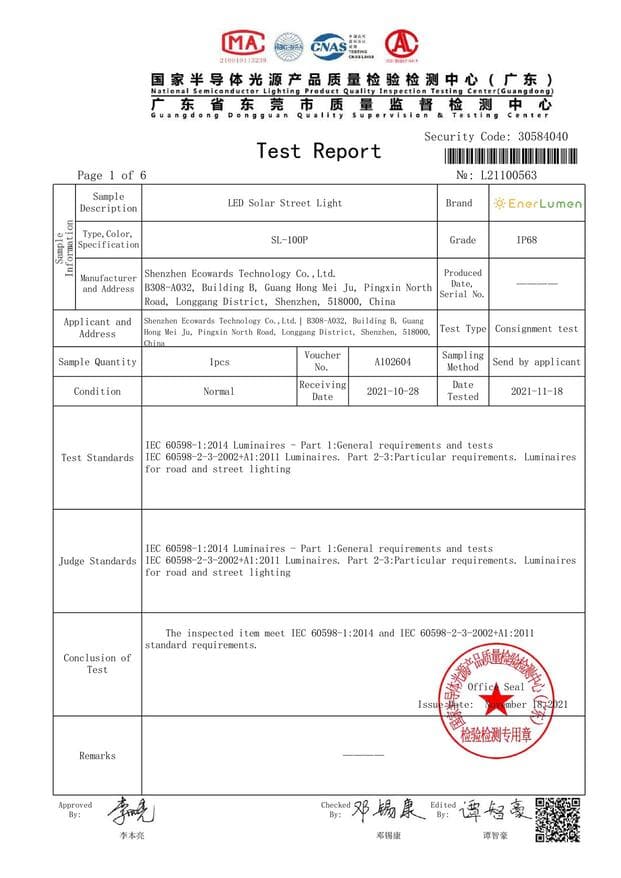
IP68 Test
Guarantees submersion-proof durability, making lights suitable for pools, fountains, and marine environments.
In-House Test Laboratory
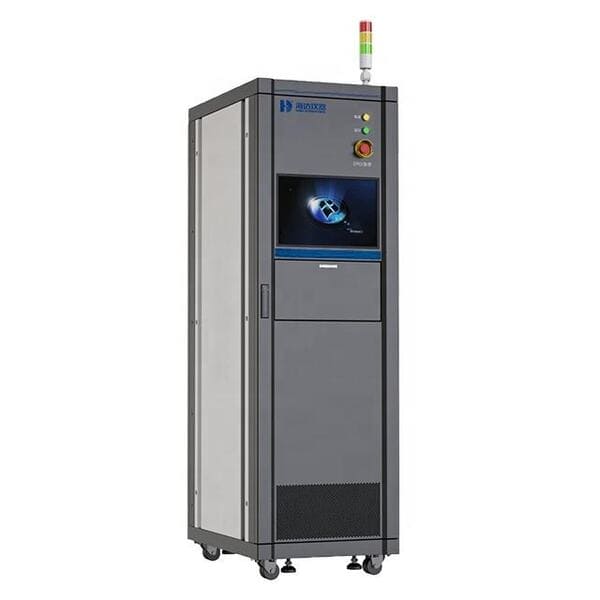
This automated system evaluates long-term battery performance by simulating real-world charge/discharge cycles (EOL=End-of-Life). It precisely measures capacity fade, voltage stability, and cycle counts to ensure your solar lights deliver consistent power for years—even in extreme heat or cold. By exposing weaknesses early, we prevent the premature failures common in unbranded alternatives.
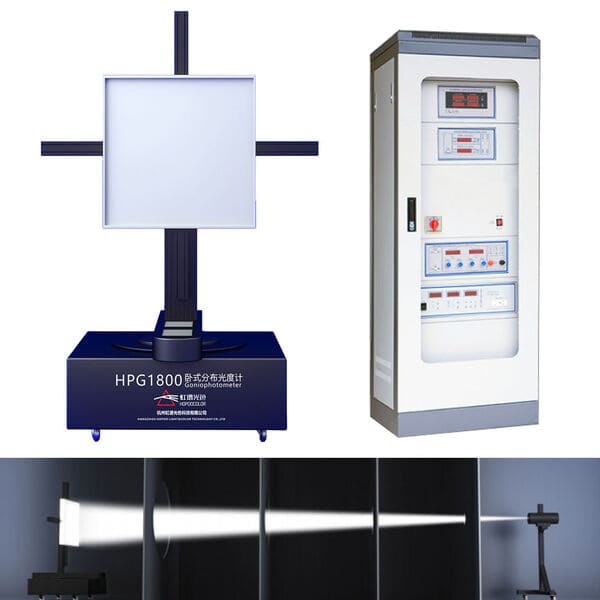
Measures 360° light distribution patterns to optimize brightness uniformity and eliminate dark spots in LED solar lights. This precision instrument generates IES files for lighting designers while verifying compliance with international photometric standards (LM-79, EN 13032). Result? Perfectly balanced illumination for pathways, security zones, or architectural lighting.
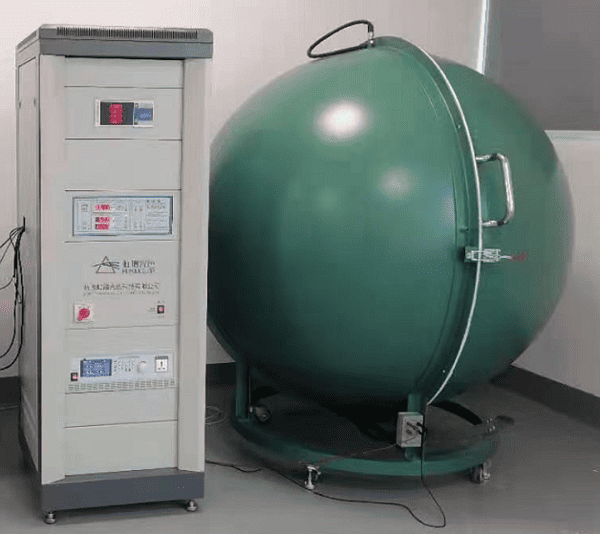
Calculates total luminous flux (lumens) and color accuracy (CRI/CCT) to prevent misleading brightness claims—common with uncertified solar lights. Our sphere-coupled spectrometer validates exact light output against spec sheets, ensuring you get advertised performance without inflated numbers.
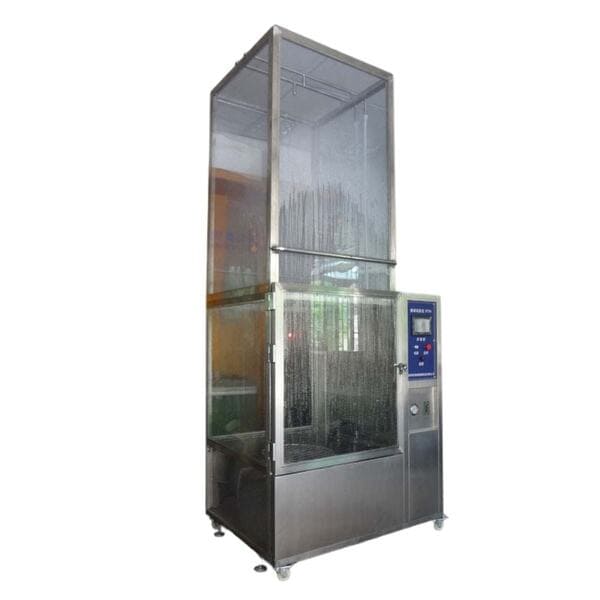
Simulates heavy monsoons and pressurized water jets to certify weatherproof ratings before mass production. The lamp undergoes multidirectional spraying at 12.5L/min for 3+ minutes, confirming seals withstand storms—critical for garden lights, floodlights, and coastal installations.
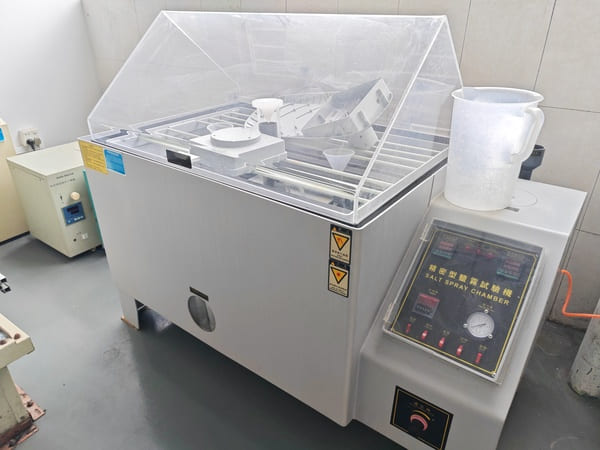
Accelerates corrosion resistance validation by replicating 5+ years of coastal salt exposure in just 96 hours. We test brackets, housings, and connectors to prevent rust failures—a must for marine-area lighting or high-humidity markets like Southeast Asia.
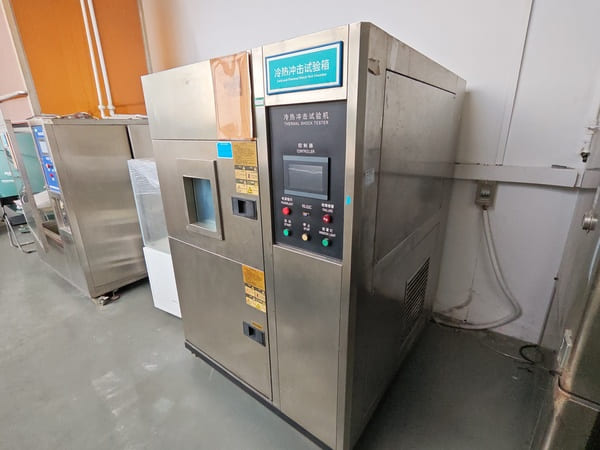
This industrial-grade chamber rigorously tests solar lights and critical components (LED boards, power supplies, lamp housings) under extreme conditions (-40°C to +85°C) with 95% humidity. Whether evaluating raw material resilience or complete product performance, we expose every part to thermal shock cycles that reveal weaknesses invisible during normal operation. Your lights are guaranteed to withstand desert heatwaves, alpine winters, and tropical monsoons without cracked lenses or electronic failures.
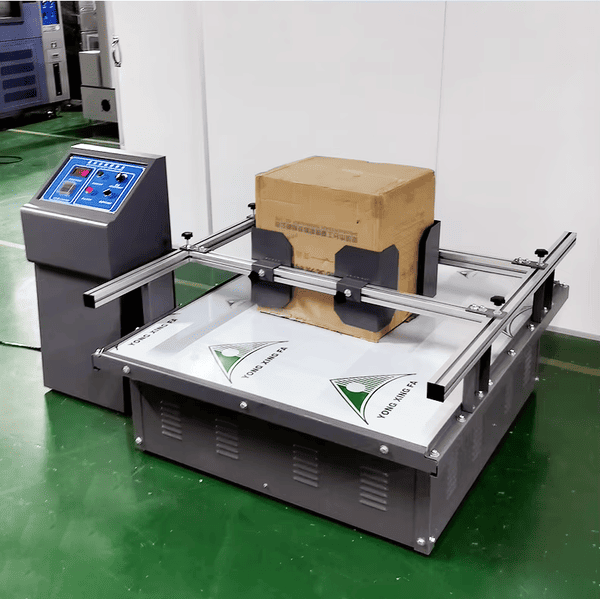
This equipment recreates real-world shipping conditions, exposing solar lights to repetitive shocks and vibrations equivalent to long-haul truck transport. We inspect every component—from solder joints to mounting brackets—to prevent loosening or damage during logistics. Your orders arrive intact, reducing post-shipping defects.
